Duds: The Card Game
Chaos & Control.
Year
2026
Services
Branding & Identity
UX Design
Game Design
Duds: TCG is a strategic and social trading card game that transforms every gathering into a battlefield of strategy, chaos and control. Play as a Dud, a unique agent with signature abilities and a playstyle, navigating a dynamic world of Action, Item, and Event cards. Every turn is a choice, every card a chance to outsmart opponents, spark collaboration, or change the course of the game entirely.
CHALLENGES
One of the primary goals of the game was to create a more engaging and interactive card game experience for groups of friends.
SHOW MORE
PROTOTYPES
651
CARDS CREATED
256
DESIGN FILES
43
ITERATIONS
21
YEARS
6
DESIGNER
1
THE BRANDING
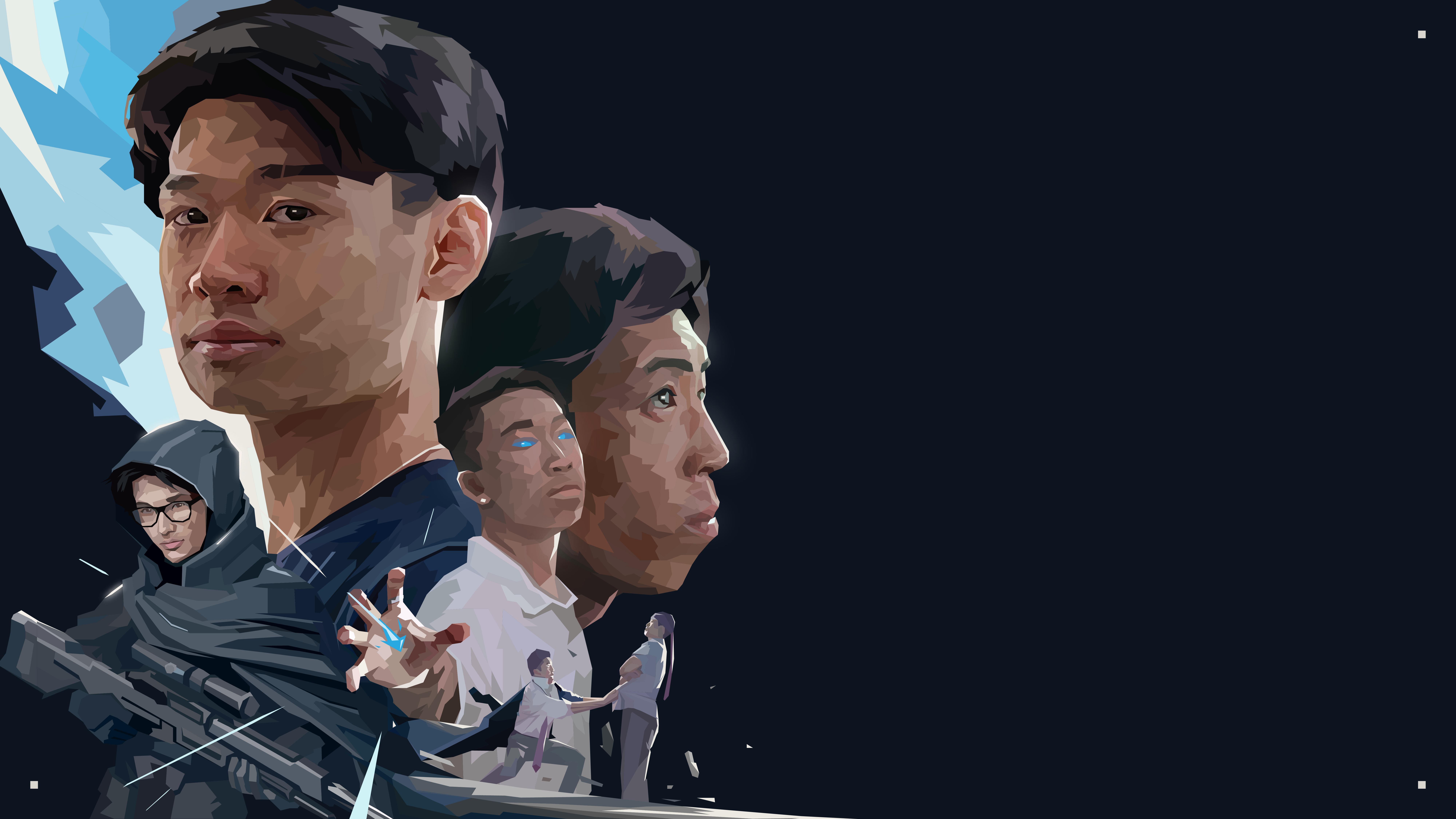
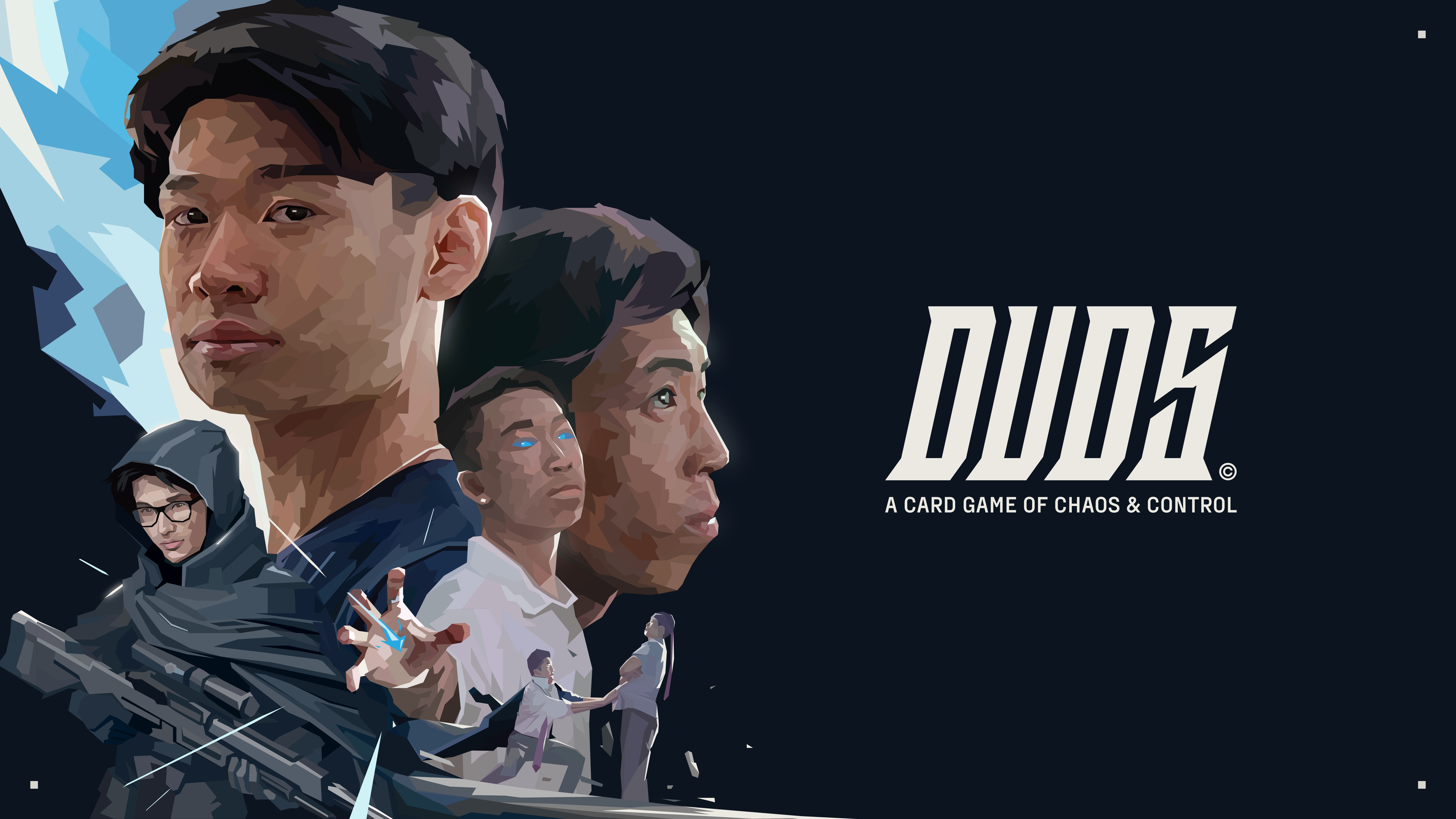
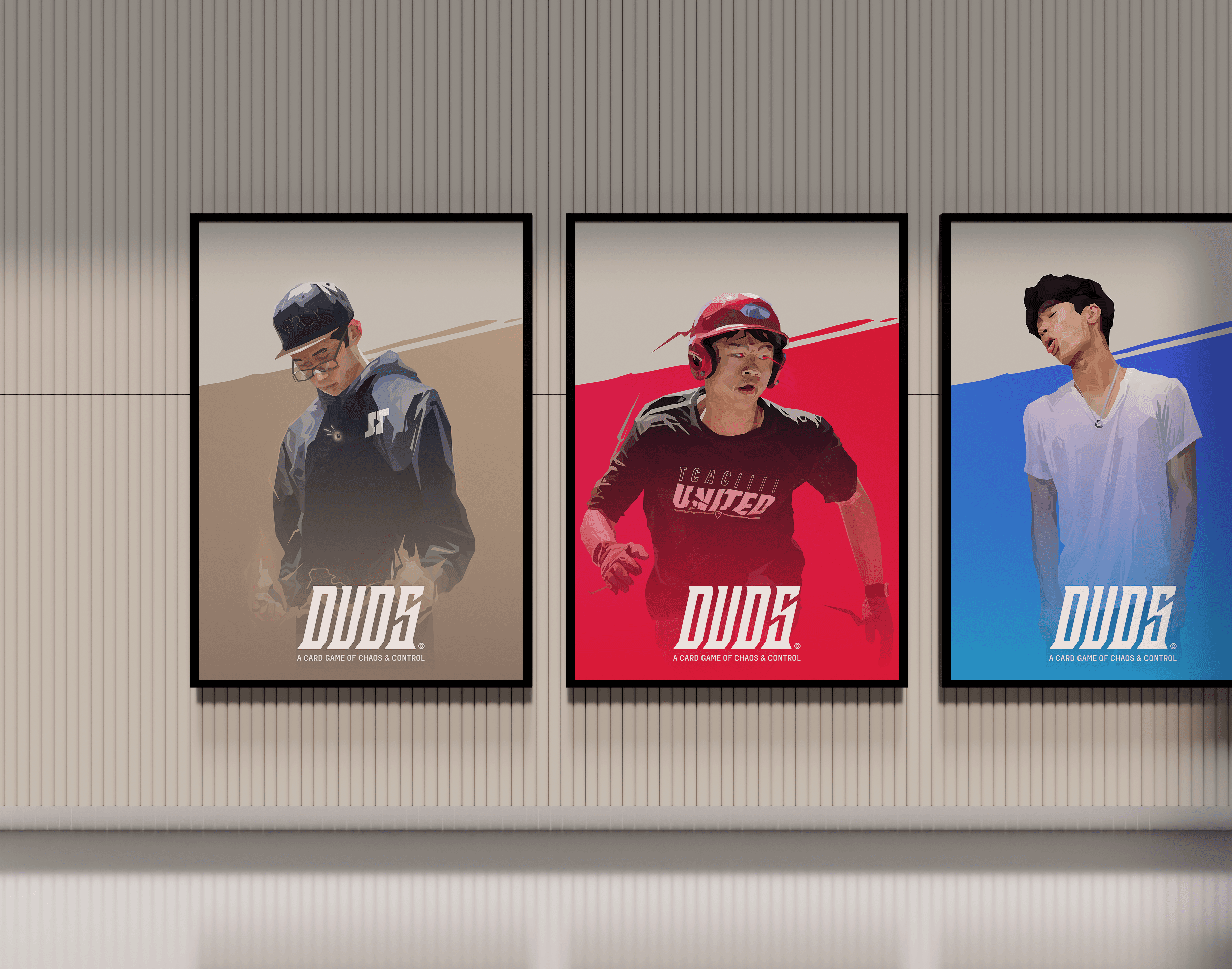
Duds is a card game of chaos and control, built around agents with distinct playstyles thrown into a shared arena where plans rarely survive first contact. The branding aims to balance clean, modern design with bursts of energy and disruption—mirroring the push and pull between calculated control and unpredictable chaos found in the gameplay. Cards feel like tools and gadgets wielded by agents rather than fantasy relics, reinforcing a tactical, competitive tone without taking itself too seriously.
THE GAMEPLAY
Duds was developed through constant playtesting with friends, focusing on how people actually behave around a table and not just how a game works on paper. From the start, the core goal was interactivity: designing mechanics that keep everyone involved even when it isn’t their turn, through reactive cards, shared Events, and even fun little cards that you could sneak onto other players. While staying true to familiar turn-based TCG structures, the game pushes players to stay present rather than disengaging between turns.
Scalability was equally important. Although Duds was built with group play in mind, the mechanics were intentionally designed to scale cleanly from chaotic team-ups down to tight 1v1 matches, where strategy and pacing become even more pronounced. Flexibility in playstyles was achieved through distinct agents, item-driven decision-making, and multiple strategic paths, allowing players to lean into control, aggression, adaptability, or experimentation based on their personality. To support high replayability, Events, win conditions, and card interactions shift each game, ensuring that no two sessions feel the same and that players are encouraged to explore new strategies every time they sit down.
Check out the full how-to-play below.
THE CARDS
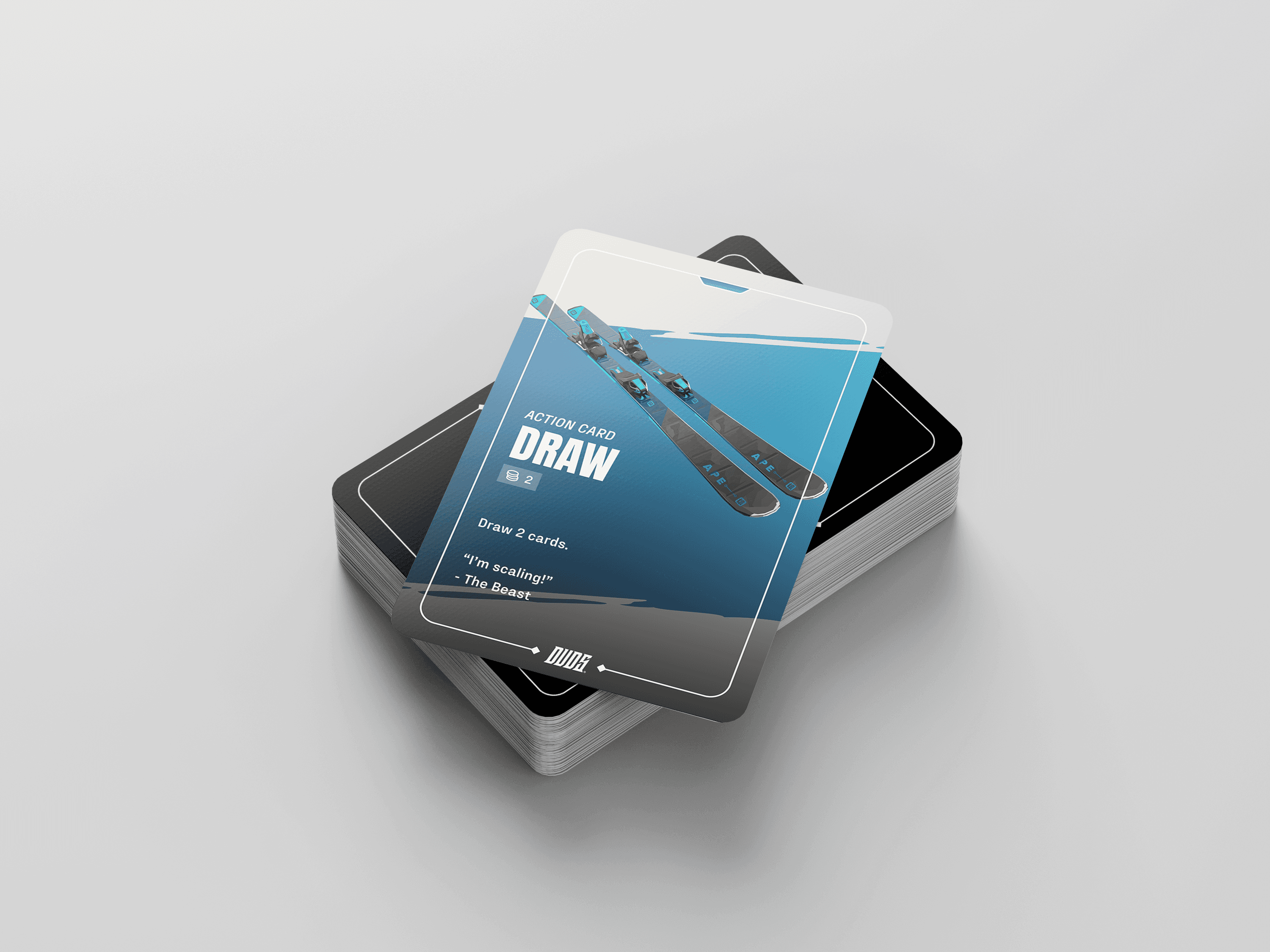
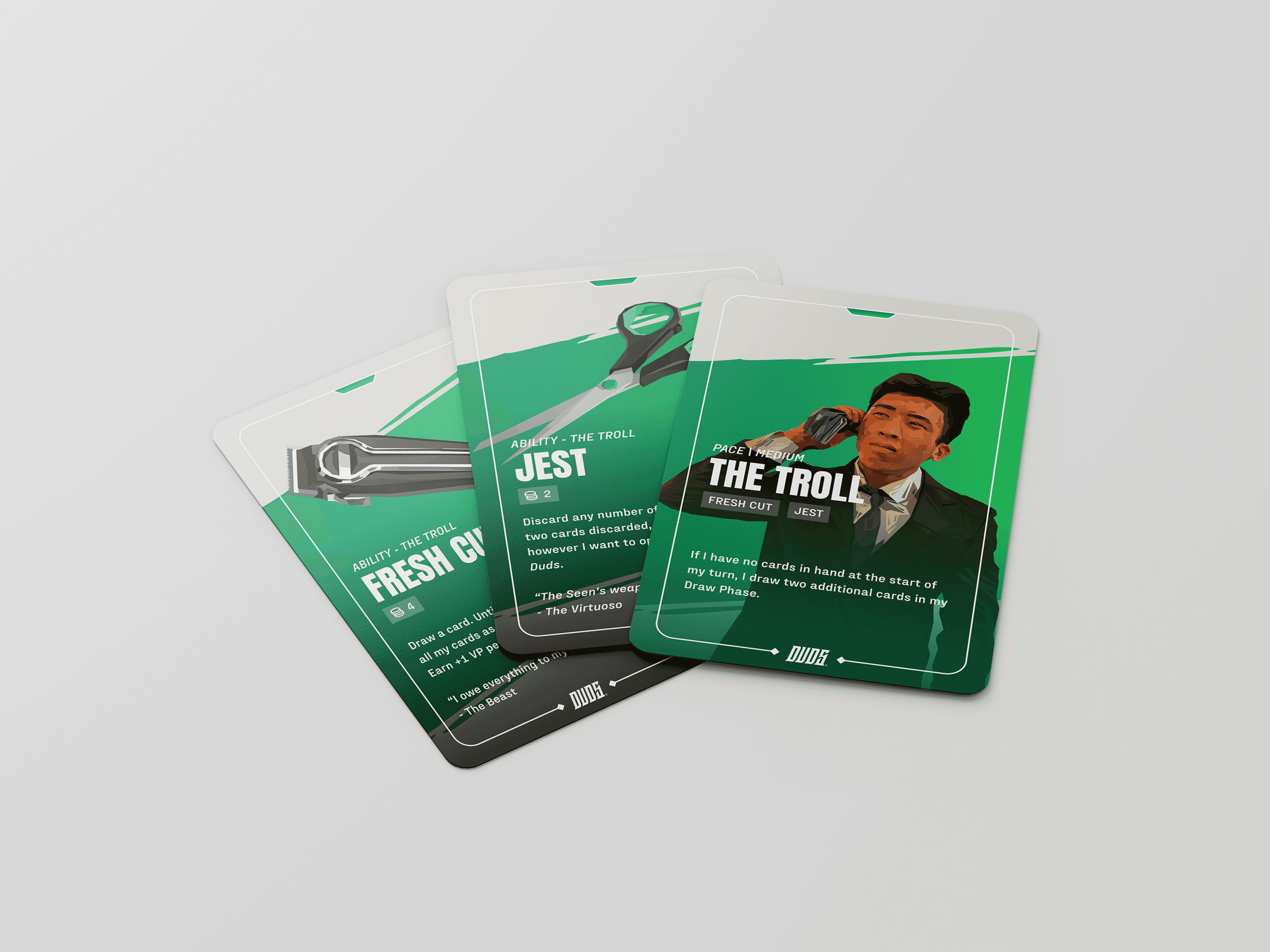
The cards were developed through a multi-step process of UX-driven iteration, eventually settling into a more classic TCG-inspired visual style. Early versions prioritized pure usability, testing different layouts, text density, and icon placement to ensure effects were readable and intuitive during fast, reactive gameplay. As the mechanics solidified, the design leaned more heavily into visual identity, embracing familiar TCG conventions like framed abilities, clear cost indicators, and bold typographic hierarchy to give the cards weight and presence on the table. Throughout playtesting, adjustments were made to balance clarity with style, ensuring the cards felt collectible, expressive, and energetic while still supporting quick decision-making and high interactivity.